Friday, September 13, 2019

10 Simple Strategies to Help English Language Learners Succeed in the Classroom :: Owlcation

10 Simple Strategies to Help English Language Learners Succeed in the Classroom
Owlcation: 9.02.2019 by Geri McClymont

Many teachers feel frustrated with English language students in their classroom. They want to help them succeed but don't know how.

Here are some easy strategies that will support your English learners of all ages and at all grade levels. These approaches can be used in classes composed of only English learners and in classes in which you have a mix of English learners and non-English learners.

10 Strategies to Help English Language Students in Class
1. Speak slowly and clearly.
2. Use fewer words.
3. Allow more wait time.
4. Model what you teach.
5. Use many visuals.
6. Use graphic organizers.
7. Teach vocabulary.
8. Build on background knowledge.
9. Use student-friendly handouts.
10. Implement cooperative learning activities.

1. Speak Slowly and Clearly
Because many of your English language learners are not exposed to spoken English in their homes, you are a primary model of the English language for them!

Take full advantage of this opportunity to model appropriate grammar and pronunciation in the classroom.

2. Use Fewer Words
Along with speaking more slowly and clearly, just as important is that you not over-saturate your English language learners with auditory input.

Say what you need to say as concisely as possible, using just the words necessary to convey your message. Leave out the "fluff"—words that are superfluous and don't add any value to your message.  READ MORE >>


Thursday, September 12, 2019

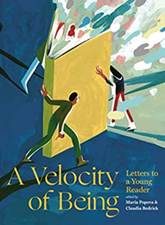
A Velocity of Being :: A Dazzling Collection of Writers & Illustrators Make The Case For Reading


A Dazzling Collection of Writers & Illustrators Make The Case For Reading
The National Book Review: 12.26.2018 by Joan Silverman

Which  of these statements is true: “A Velocity of Being” is the name of (a) a  scientific tract, (b) an existential treatise, or (c) a children’s  book?

It is indeed the title of a children’s book — for middle school readers, or tweens, to be exact. But that’s like saying that candy is solely for children. “A Velocity of Being: Letters to a Young Reader” is for adults and kids alike — for anyone who’s ever thought about the meaning and value of books. It’s also a twofer in other ways: It’s an illustrated book with bold artwork on every spread, each letter paired with its graphic counterpart. And it’s undeniably a coffee table book for the grown-ups in the room.

“Velocity” is a celebration of reading and books, and quite a feat, at that. The book’s editors, Maria Popova and Claudia Bedrick, sought out authors of every stripe — novelists and scientists, artists and entrepreneurs — and asked each of them to write a letter to young readers. The list of contributors reads like a Who’s Who of contemporary  culture — David Byrne and Yo-Yo Ma, Jane Goodall, Ursula K. Le Guin, Richard Branson, Anne Lamott — with 121 letters in all.  Ditto for the many illustrators, including Maira Kalman and Roz Chast, who gave visual life to the project. Remarkably, the whole venture was an act of readerly altruism: Eight years later, the book has arrived, its contents donated, and its profits earmarked for the New York Public Library. That, in tribute to the essential, formative role that books and libraries play in our lives.  READ MORE >>


Wednesday, September 11, 2019

Literacy – Spanning the US :: Ventura Co CA :: Colusa Co CA :: Frederick MD


Literacy: Spanning the US

A Literacy Initiative Is Spreading In Oxnard One Neighborhood At A Time
VC Star: 8.12.2019 by Wendy Leung

It's a classic tale of redemption.

A sneaky fox runs around with his thieving ways to the chagrin of the animal kingdom. By the end of the book, the fox realizes the importance of friendship and sincerely apologizes.

Like other storytimes with children, this one featured both rapt listeners and younger wanderers. What's different is this storytime at a south Oxnard park was read in English, Spanish and Mixteco, an indigenous language of Mexico.

Stephanie Perea, 9, who speaks Mixteco at home, had never heard a story in her native tongue. She said it'd be "cool" if Mixteco stories were read at school.

"I like it," she said. "I can learn more Mixteco words."

On Mondays through Thursdays for the month of August, community leaders are reading to children at Southwinds Park starting at 6 p.m.

English, Spanish and bilingual books are read and some are translated to Mixteco. Those who stick around after the reading get a snack of pan dulce and champurrado, a traditional Mexican hot chocolate drink, thanks to a local bakery.

"I have to tell you, Southwinds neighborhood is Southwinds strong," said Lucy Cartagena, who organized the reading initiative.

Cartagena is an Oxnard resident who founded Families First Project of Ventura County, a nonprofit program offering parent education workshops.  READ MORE >>

County’s Second Online Graduate Receives Diploma
Appeal Democrat: 8.13.2019 by Lynzie Lowe

Technology has changed the way we do most everything these days, including how some complete their educations.

On July 31, the Colusa County Free Library hosted a graduation ceremony for Maxwell native Savana Crooker, who received her high school diploma with an emphasis in Childcare and Education from Career Online High School.

Alissa Morrow, literacy coordinator at the Colusa County Free Library, said Crooker is not only the second graduate of the Career Online High School program in the county, but she also the is the first student in the program to finish with no previous transcript credits.

“This shows the caliber of her dedication and drive to create a different future for herself, and her family,” Morrow said.

Crooker was able to finish all four years of high school coursework in just one years time because, she said, the self-paced and 100 percent online program allowed her to get school work done whenever possible.

“I snuck schoolwork in every opportunity I came across, waiting rooms at doctor’s offices with the kids, sitting in parking lots waiting for the kids to get out of school,”  Crooker said. “Any spare-ish moment I came across I used.”  READ MORE >>

Literacy Council Celebrates Achievements Of Adult Learners, Volunteers

On June 11 the Literacy Council of Frederick County celebrated the life skills achievements of its adult learners, volunteers, and heard testimonials about the impact of the Council’s new workplace literacy and parent outreach initiatives.

Catherine Cox, board president, announced that the Literacy Council has been selected by the Catalogue for Philanthropy Greater Washington for its 2019/2020 class as “one of the best community-based nonprofits in the region.”

The highlight of the evening was witnessing students being applauded for achieving multiple milestones this past year — becoming U.S. citizens, passing the test for a Maryland driver’s license, moving to better housing, helping to support their children’s education needs, volunteering in a school or other community organization, improving English language skills in order to obtain a better job, completing a writing or conversation class, advancing in a curriculum series or gaining a higher reading level. Literacy Council volunteers were recognized for their many hours and years of service contributed over the year.

Frederick County Executive Jan Gardner addressed the audience about the value of cooperation between nonprofit organizations, local businesses, schools and government. She presented several special commendations, including recognizing student Karina for becoming a U.S. citizen.  READ MORE >>


Tuesday, September 10, 2019

The State of Global Literacy (And Where the United States Stands) via IMSE

@IMSEOG
The State of Global Literacy (And Where the United States Stands)
IMSE Journal: 8.14.2019

Even with increased attention from policymakers and the public, literacy trends are predicted to stay stagnant in middle and high-income countries over the next decade. In Francophone African countries, literacy rates are expected to drop by nearly a third by 2030.

Literacy is a bit of a trigger word in today’s landscape. Between Michigan’s Read by 3rd Grade retention law, the emphasis on media literacy, and the challenges of adult illiteracy across the world, some argue it’s a global crisis.

It is true that literacy rates have been trending up over the last 2 decades, going from 83% to 91%. However, according to UNESCO, there are still an estimated 617 million children in primary and lower secondary schools that lack minimum proficiency in reading. What’s more eye-opening is that 750 million adults still cannot read or write a simple sentence.

Even with increased attention from policymakers and the public, literacy trends are predicted to stay stagnant in middle and high-income countries over the next decade. In Francophone African countries, literacy rates are expected to drop by nearly a third by 2030.

And while you might think that the United States is at the forefront of literacy and education, it ranks 125th for literacy rate among all countries. The reasons for that are quite complex.

The Organization for Economic Cooperation and Development (OECD) is comprised of 35 countries, most of which are from Europe. OECD compiles educational data from nations across the globe.

According to their latest report, the United States was one of only five countries in the OECD to cut education funding in the years leading up to the study. The United States spent approximately $12,800 per student on elementary and secondary education, which is 35% more than the OECD country average.

Where the United States starts to fall behind is how much knowledge students gain from their education. According to the Programme for International Student Assessment, 15-year-olds in the U.S. ranked 31st out of 35 OECD countries in standardized tests.iii

What more countries are starting to realize is that without a solid foundation of literacy skills, students are being set up to fail in all other areas of their education.

The stale educational adage of “learn to read, read to learn” is starting to show its many flaws, one of which is that everyone learns differently.  READ MORE >>


Adult
2019: Adult Literacy in the United States, NCES 2019-179
2013: OECD Skills Outlook 2013: First Results from the Survey of Adult Skills, OECD
2009: Literacy of America's Least Literate Adults, NAAL 2003
2006: Literacy of America's College Students, AIR
2007: Literacy in Everyday Life, NAAL 2003
2003: National Assessment of Adult Literacy, NAAL
2000: Programs for Adults in Public Library Outlets, USDE, NCES
1992: National Adult Literacy Survey, NALS

International

Ongoing
Progress in International Reading Literacy Study, PIRLS
Program for International Student Assessment,  PISA
Programme for the International Assessment of Adult Competencies, PIAAC
2017: Literacy Rates Continue to Rise from One Generation to the Next, UNESCO Fact Sheet No. 45:
2016: Human Development Index, UNDP
2015: Economic & Social Cost of Illiteracy: A snapshot of illiteracy . . . World Literacy Foundation
2006: Literacy for Life, Global Monitoring Report, UNESCO
2003-12: Literacy Initiative for Empowerment (LIFE), UNESCO


Monday, September 9, 2019

Literacyworks Learner Web Portal


Literacyworks Learner Web Portal

Welcome to the Literacyworks Learner Web Portal!
(formerly the LINCS Learner Web Portal)

On this site, you can choose the professional development literacy topic you want to learn about and get the support you need to successfully complete your educational goal. The Literacyworks Learner Web connects you with high-quality instructional resources informed by research, especially scientifically based and other rigorous research, for use by adult education and literacy educators. Each topic saves your work and tracks your progress to help you meet your Goals.

On the Literacyworks Learner Web, we can help you with your Professional Development Goals all online! And it's free!

If you would like more background information on Tutor Ready, click here to watch a Tutor Ready learning plan webinar.

Teaching Adults to Read
Self-paced courses based on a 3-day workshop on the four components of reading, developed by experts in the field of adult basic education and literacy: Dr. John R. Kruidenier, Susan McShane, and Dr. Rosalind Davidson.  READ MORE >>


Sunday, September 8, 2019

Literacy – Spanning the US :: Oswego NY :: Azusa CA :: Butte Co CA :: Charleston SC

Literacy: Spanning the US

Oswego Literacy Coalition Hosting Story Hour With Cookie Monster To Promote Reading
Local Syr: 8.05.2019

Whether it’s practicing difficult words or reading books, an event hosted by the Literacy Coalition of Oswego County is promoting reading and learning during the summer break.

At the Oswego County Fair (August 6th to the 11th) the Literacy Coalition will celebrate Cookie Monster’s 50th anniversary with WPBS with a story hour and giveaways.

Giveaways will include school supplies, books, and backpacks to raise awareness of illiteracy.

“’Summer slide’ is a real thing,” said Carri Waloven, a volunteer for the Literacy Coalition. “We want to make sure that families are keeping their kids interested in books and get them ready for when school starts up again.”

When kids build habits of reading, said Waloven, it can help them greatly later in life as they develop important literacy skills.

The Literacy Coalition’s goal is to connect families to services as well as educate the community about opportunities to create financial, workforce, and technological literacy to improve their quality of life.  WATCH 04:17

Azusa Library Adult Literacy & Citizenship Classes
Discover The Foothills: 8.03.2019 with Stephanie Martenzi

Learn more about the Free Adult Literacy Program and Citizenship Classes at the Azusa Library.  Be a participant and attend the classes or be a volunteer!  WATCH 06:30

15 North State Immigrants Become U.S. Citizens In Gridley
KCRTV: 8.06.2019 by Jerry Olenyn

Fifteen North State immigrants were sworn in as citizens of the United States Tuesday at the Gridley Library.

They came from Afghanistan, India and Mexico, happily handing in their green cards to become American citizens.

"I feel pretty proud of myself because I came here six years ago and it's a very important day to me," said Isamar Cabrera.

U.S. Representative Doug La Malfa, (R) California 1st District and a strong opponent of illegal immigration, gave the keynote speech, congratulating and commending the 15 for their accomplishment.  WATCH 01:49

Everyday Hero: Caroline McKinney
Count On 2: 8.09.2019 by Octavia Mitchell

She’s a stay at home mom who is using her time to help others find and understand a new voice. Caroline McKinney is doing what she can to make a difference in our community. She’s our Everyday Hero.

Stay at home mom, Caroline McKinney spends her time here as a volunteer at Trident Literacy.

“I help them to get better at reading, writing, speaking and listening skills,” says McKinney. She has a Master’s Degree in Speech Language Pathology, and helps adult students in the ESL, English as a second language program. McKinney says, “When I came here and started doing this, I just loved it. It was just like ok I wish I found this twenty years ago. I feel like it was almost what I was meant to do. I feel like I get so much out of it being here.”

Trident Literacy is one of the top performing adult education organizations in the state, helping to change lives everyday. The forty-seven-year-old nonprofit helps adults learn to read and write, offer GED preparation classes, ready to work career classes, and ESL English as a Second Language courses.  WATCH 03:04


Saturday, September 7, 2019

Wordless Books in Story Time via ALSC Blog


Wordless Books in Story Time
ALSC Blog: 8.15.2019 by Amy Steinbauer

I recently observed a story time of a newer story time presenter. I saw their passion and playfulness with the preschool crowd, but felt them trip over the words of the story a bit. Afterwards, we followed up– and I admitted that I only take the words of the books as a suggestion. A tip that I love sharing with parents and caregivers— you don’t have to read every word of the book, every time you read that book. There are many retellings of favorite books, and words are only one part of the story for “reading” the book.

My takeaway from the observation was that they should try wordless books, as they are very animated, expressive, and play to the energy of the audience. However, I have also been advised by others that only more experienced story timers would try a wordless book.

I disagree, and would like to make the case for wordless book story telling.

1. I often implore parents/caregivers to check out wordless books. If parents can handle it, then anyone else can (who regularly reads to children) There are many benefits:

   1. Have the ability to tell your own story– use bigger/rare words to build vocabulary

   2. Use it to allow children to build their narrative skills and retell it how they view the story

   3. Have fun while reading! Try using the pictures to re-tell the story as a scary story or a funny story! It can be so much fun!

   4. Very accessible to multi-language use to build skills, or interactions with language barriers (like caregivers who don’t speak English as their first language), for example read one page in English, then answer it in Spanish.

   5. Talk about emotional skills— how can you tell what the characters are feeling without words? I think that can build general empathy skills– look at the faces and see their emotions.

═════════►
My favorite wordless books for story time/read alouds:  READ MORE >>